
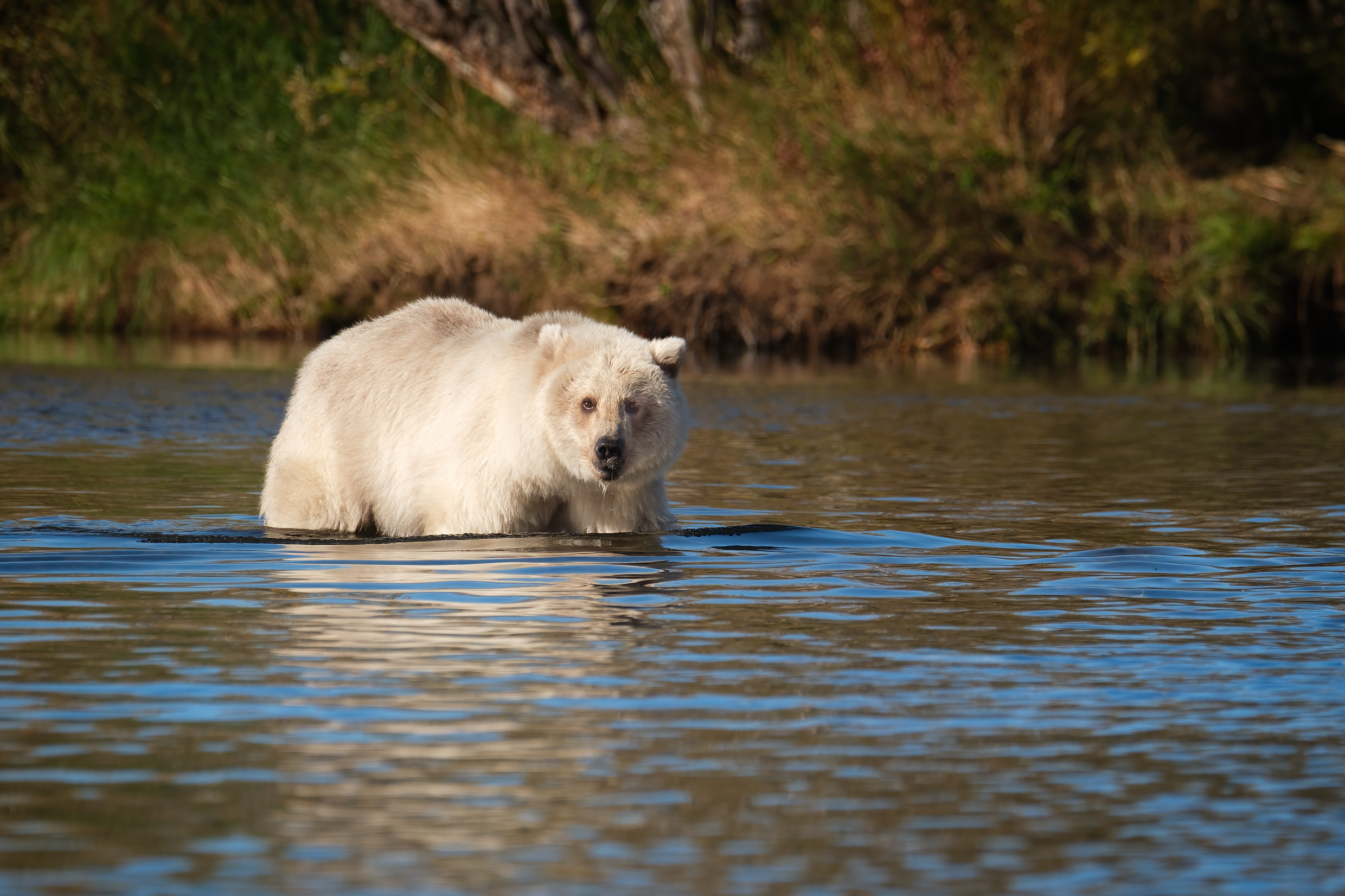
I recently returned from a fantastic workshop in Alaska and have a funny story to share about target fixation. Of course I came home with many many images and other stories, but this story stands out to me as it was scary and makes a great point about how target fixation can have consequences.
Target fixation isn’t just applicable to wildlife shooting, it also is very relevant to landscape shooting. Often times we arrive at a location chosen because of an iconic feature, or some reason that drew us to this spot. We get out of the car so focused on the “thing” that brought us to this location. Our attention and creativity is solely focused on our target and we aren’t receptive to any other interesting things at this location. I’ve seen this over and over during my workshops and it’s another reason why I tell people to “slow down”. Slowing down causes us to shift some of our focus away from our intended target and open ourselves up to other possibilities. Target fixation is normal and natural for us as humans. To minimize this, we have to train ourselves to see beyond the target and open up to stimuli around us.
So, my story about target fixation in Alaska. Generally I am very open and receptive to what’s going on around me. It’s something I’ve worked hard on over the past years. Being receptive and reactive to what’s around me has led me to create some amazing photographs that I never had envisioned at a particular location. I have been aware of target fixation and have worked hard to minimize this in myself. On day 4 of my Alaska workshop, I fell in to the target fixation trap and I was reminded of how costly this can be. On this particular day, we were floating a river on small rafts, traveling through bear country. Every time we saw bears, we would stop the rafts and shoot them. Because the size of our group, we had 3 rafts on the river and eventually each raft went at their own pace and did their own thing. My raft was piloted by the senior guide, Tanner, and he had mentioned that he had seen some white cubs on this river in the past couple of weeks and maybe we’d get lucky enough to see them again. This really sparked my interest as I’d not seen a white cub before on all the trips I’ve been here. I started to get excited and anticipated the moment we might see it.
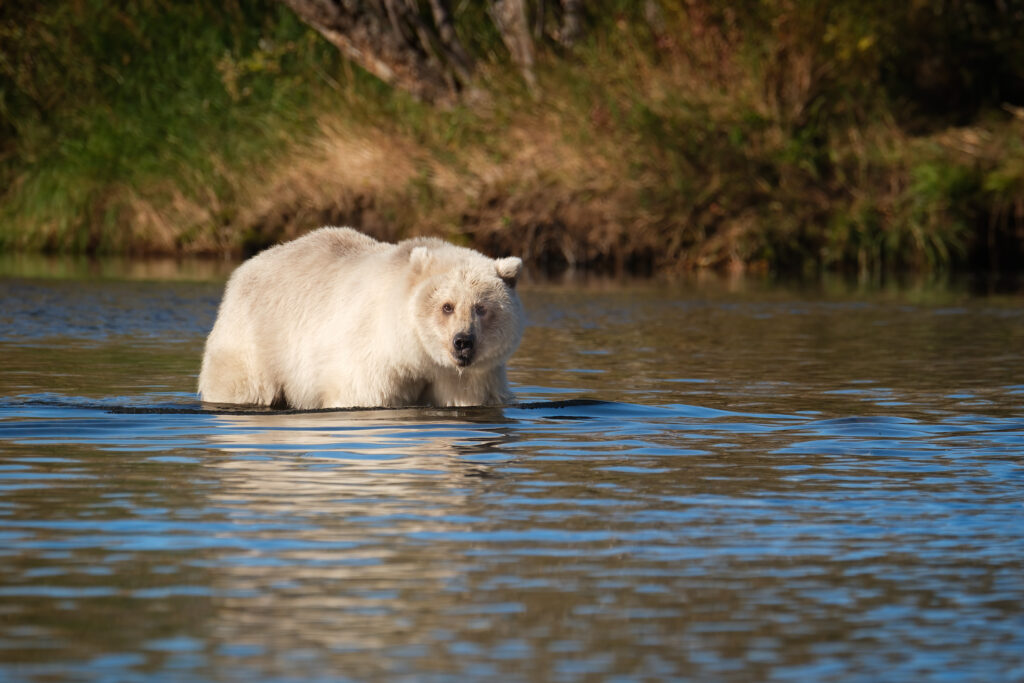
Our raft was the last of the group and we caught a glimpse of a white cub on a side channel of the river. We pulled our raft up on to a gravel bar and got out. There were 6 of us in this boat and we gathered together and readied our cameras. The excitement was heightened for me as this side channel had calm water, smooth on the surface and was reflecting the blue color of the sky. Plus, the background foliage was showing Fall color and in combination with the smooth water, I felt it would make a tremendous image! I was getting quite excited at the possibilities!!! We formed up in a line and walked slowly and softly, not wanting to spook the sow or her two cubs, one of which was the white one. I was in the lead as we started walking and Tanner advised us to walk near the right hand bank of the river, fully exposed to the bears so that they would see us and not be startled. They did in fact notice us and didn’t seem spooked at all as they have learned humans are not a threat if we present ourselves as non-threatening. We had about 30 yards to walk along the side channel to get in the best position to photograph the white bear with the water and fall color behind us. As we walked, I stayed visually focused on the bears while my feet hunted for firm footing on the rocky stream bed below.
Let me give you a bit more context of the environment we were in. These small rivers are 30-100 yards wide and the side  channel we were in was perhaps 25 yards wide. The banks of these rivers are dominated by alder bush and tall grasses. Because this is prime fishing area for the bears, every 3 feet you could see openings in the bushes where the bears have trampled down the foliage to stand on the bank and scan for un-suspecting salmon below. Up and down the river bank there is a trail system the bears use to travel and I’ve learned over the years that the bears can appear at any moment from these trails along the river bank at one of the openings. And, for such large creatures, you really can’t hear them coming, they move almost silently. The only clues you might get is a “chuffing” or heavy breathing before the bear appears. I’ve always had a healthy dose of caution when walking close to the river banks in Alaska, not wanting to surprise, or be surprised by, a bear.
Welp, I was so fixated on the white cub and getting us in to a good location to photograph it and its family, I had disregarded my learned caution and stuck close to the right river bank and all my attention was focused on the  white cub. We were about halfway to the spot I wanted to set up when I gradually heard my name being called by the guide Tanner. I learned later he had said my name 3 times before it registered with me and I reacted. I heard “John, move to your left”. I quickly processed that information, not needing a reason why since I figured that if he was saying that, there was probably a good reason. I figured there was something on my right side that he wanted to move me away from. Instinctually, I looked to my right to see what was there. The river bank and grasses were about 4-5′ tall, so I was almost looking at ground level as I turned. What I saw almost made me soil my waders! The bear was above me on the bank, 8-10′ away, staring right at me, was a BIG grizzly bear!!!! It had appeared from the grasses and was looking intently at me! Oh Sh*t! I remember its head as being so huge and imposing and it did not have a friendly look on its face. A flash of panic overcame me as I started to step to my left. My primal instinct, fight or flight, told me to run away, however that’s the worst thing you can do as it could trigger the “prey response” in the bear. So calmly I began to move as quick as I could to the left away from the bear. And remember, we were walking in a river and the rocks underneath were slippery and loose and I had this fleeting thought that I would trip and fall into the river and trigger the bear to lunge! Thankfully that did not happen and I was able to move a safe distance away. Someone else in our group managed to snap a picture of the ninja bear the almost got me. With adrenaline still coursing through my system, I made it further in to the side channel and we set up in a location that was the best photographically for mom and her two cubs. We had a great photo session with the bears, lasting about 30 minutes as they fished and waded in the water. Eventually they crossed the river into the brush and disappeared.
My target fixation caused me to lose sight of my surroundings and overrode my learned caution about being close to the bear trails along the rivers edge. Even if you never visit Alaska and have to worry about grizzly bears, you can still fall prey to target fixation. Often our attention is drawn to and focused on the most obvious subject at a location, for example a waterfall. It’s easy to know what to shoot and we don’t have to hunt around for photos. However, this target fixation can cause us to walk right past and ignore some amazing possible compositions. Our attention is on the big and obvious, while the subtle and nuanced elements get overlooked. When you get to a location, slow down, look around and work to avoid target fixation.
Leave A Comment